
EURUSD
- EUR/USD Price: The EUR/USD pair is holding modest gains for a second consecutive session, trading around 1.1390 during Wednesday's European session.
- Trump's pressure: US President Donald Trump once again called on Fed Chairman Kevin Warsh to lower interest rates, arguing that inflation has eased, costs are falling rapidly, and prices should decline further once the Gulf conflict ends.
- Fed stance: According to Commerzbank's Antje Praefcke, the Federal Reserve is likely to deliver a "hawkish hold", keeping interest rates unchanged while maintaining a tightening bias.
- US data: Recent US economic releases painted a mixed picture. Consumer Confidence came in at 90.8, below expectations of 92.4, while the Richmond Fed Manufacturing Index also slightly missed forecasts, suggesting some moderation in economic momentum without materially changing the Fed's outlook.
- Eurozone inflation: Investors are now turning their attention to the upcoming German and Eurozone Harmonized Index of Consumer Prices (HICP) for July.
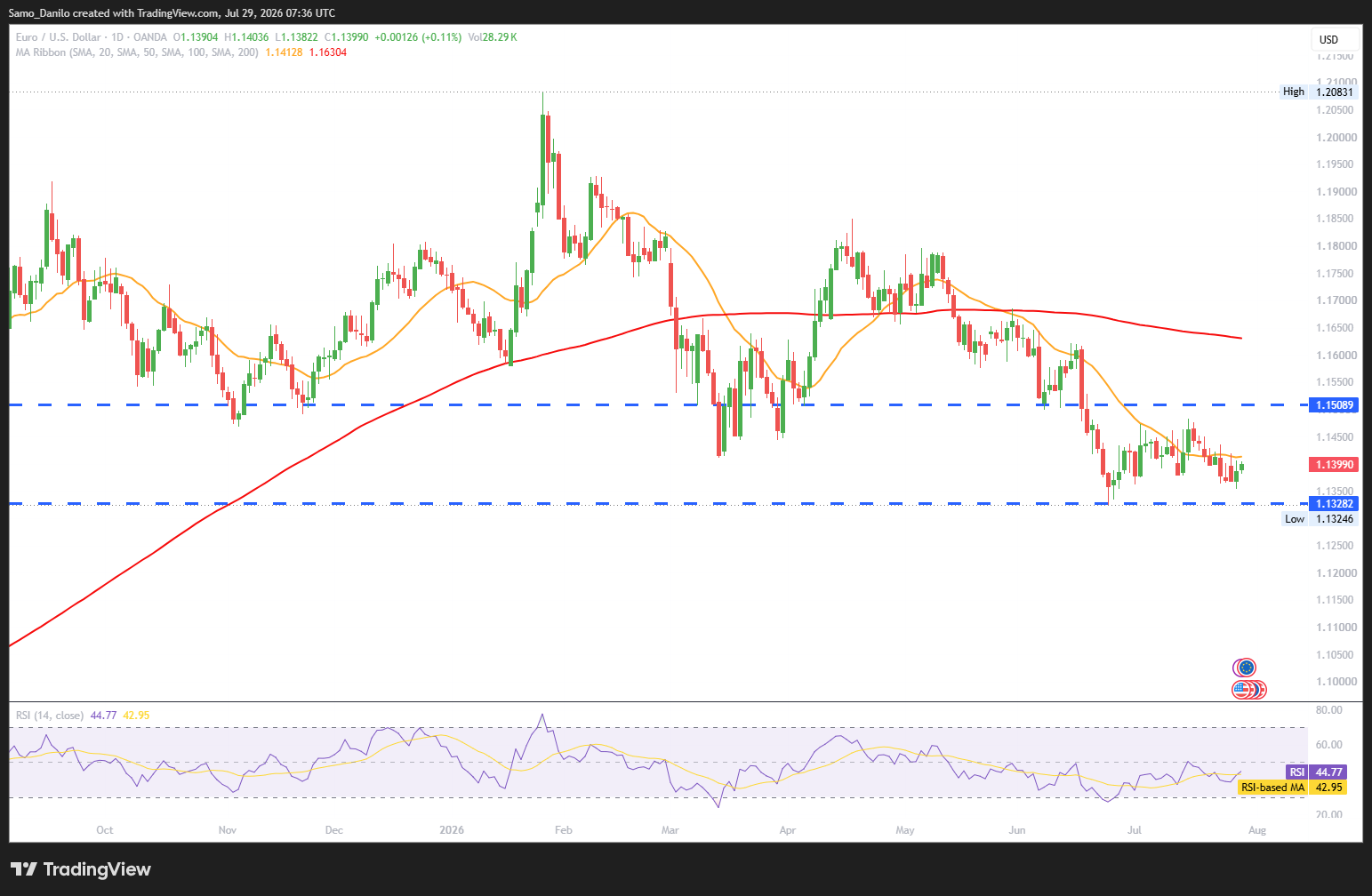
| SMA (20) | Slightly Falling |  |
| RSI (14) | Slightly Falling | |
| MACD (12, 26, 9) | Slightly Falling | |
Closing statement: EUR/USD is trading in a relatively stable range as markets balance expectations of further ECB tightening against the prospect of a hawkish Federal Reserve. This week's eurozone inflation data could prove decisive in shaping expectations for the ECB's next policy move and the pair's near-term direction.
GBPUSD
- GBP/USD Price: The GBP/USD pair edges higher during Wednesday's European session, trading around 1.3300 after ending the previous day largely unchanged.
- Shadow MPC: The London Times Shadow Monetary Policy Committee (MPC) voted 7-2 in favor of the Bank of England (BoE) keeping its benchmark interest rate unchanged at 3.75%.
- US-China: Trade relations between the United States and China have become increasingly strained ahead of President Xi Jinping's planned US visit in late September. The Trump administration is reportedly preparing new restrictions on imports of foreign-made robots and inverters, prompting a swift response from China's Commerce Ministry and adding to global trade uncertainty.
- US-Iran: Market sentiment improved after reports suggested Middle East mediators are making progress toward reviving the US-Iran Memorandum of Understanding (MOU).
- BoE decision: Investors are now looking ahead to the Bank of England's policy announcement later this week.
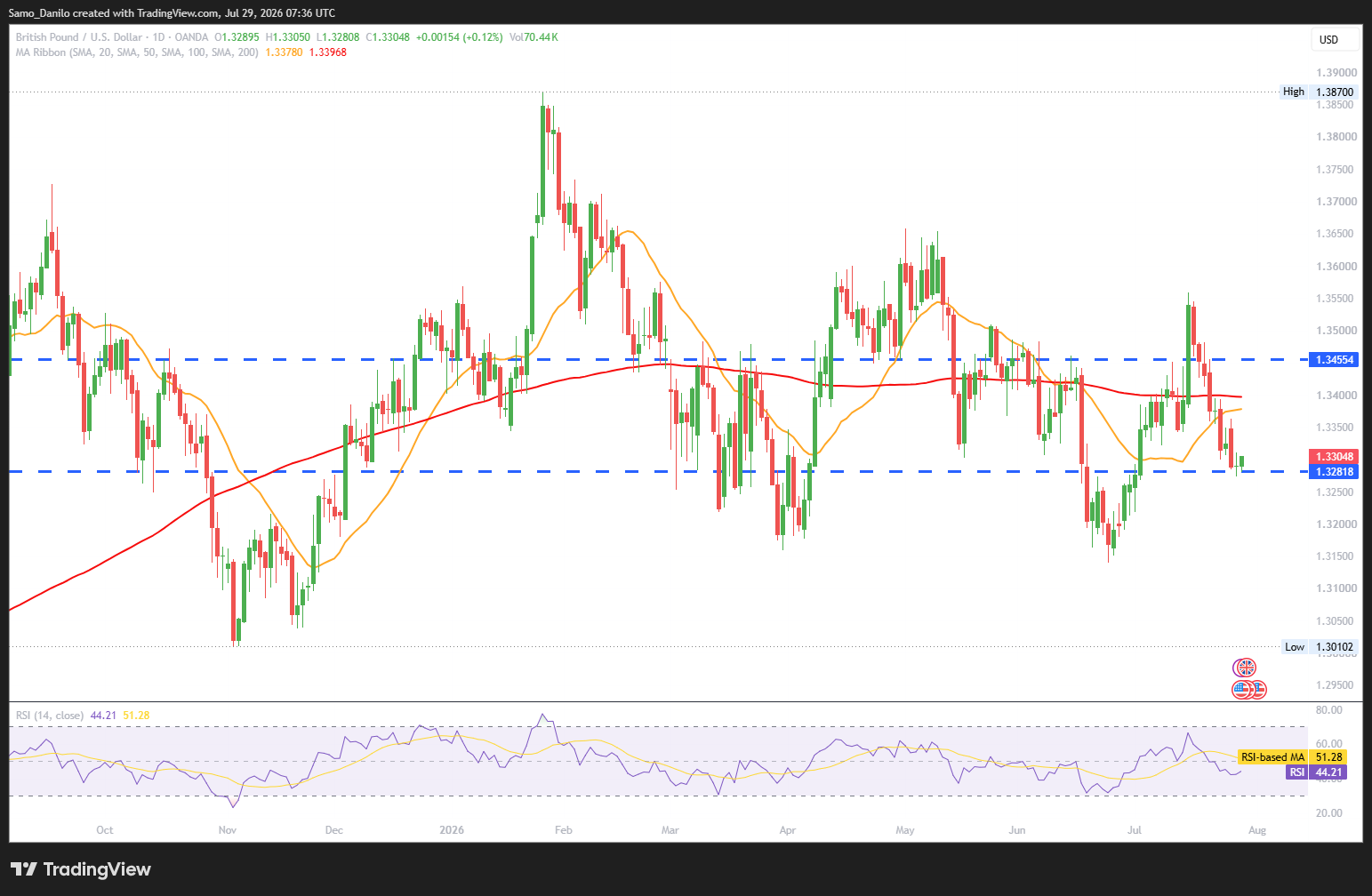
| SMA (20) | Slightly Rising |  |
| RSI (14) | Slightly Falling | |
| MACD (12, 26, 9) | Slightly Falling | |
Closing statement: GBP/USD is holding modest gains as markets await the Bank of England's policy decision. While expectations for unchanged UK interest rates are limiting volatility, developments in global trade relations and improving geopolitical sentiment remain important drivers for Sterling in the near term.
XAUUSD
- XAU/USD Price: Gold (XAU/USD) extends its intraday recovery after bouncing from an over one-week low, climbing back toward the $4,050 level during Wednesday's European session.
- Japan earthquake: A powerful earthquake in Kumamoto, Japan, has led several major manufacturers, including Tokyo Electron and TSMC, to temporarily suspend factory operations for safety inspections. The disruption, alongside reports of at least 13 fatalities, has increased market uncertainty and supported demand for defensive assets such as gold.
- US policy: The Trump administration plans to end the Medicare Part D subsidy program after 2026, arguing that the subsidies are no longer necessary.
- Fed rate: According to the CME FedWatch Tool, traders see a 69.5% probability that the Federal Reserve will leave interest rates unchanged within the 3.50%–3.75% range at its upcoming policy meeting.
- Middle East: Geopolitical risks remain elevated after US Central Command conducted precision strikes in Iraq against Iran-backed groups allegedly planning attacks on US forces and Saudi oil infrastructure.
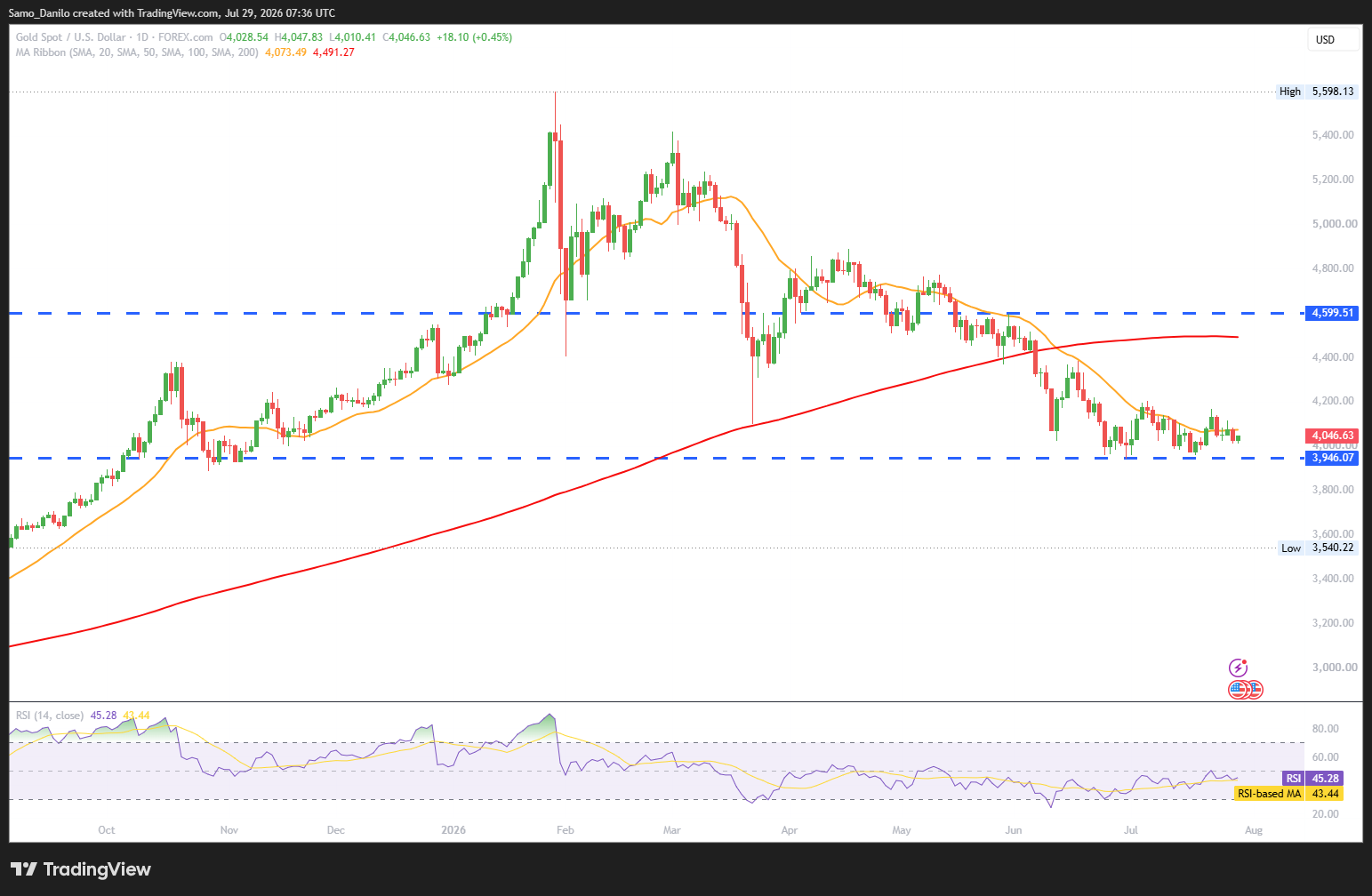
| SMA (20) | Slightly Falling | |
| RSI (14) | Slightly Falling | |
| MACD (12, 26, 9) | Slightly Falling | |
Closing statement: Gold is recovering as renewed geopolitical tensions and broader market uncertainty revive safe-haven demand. However, with the Federal Reserve's policy decision approaching, traders are likely to remain cautious until they receive clearer guidance on the outlook for US interest rates.
CRUDE OIL
- Crude Oil Price: West Texas Intermediate (WTI) has regained positive momentum during Wednesday's European session, rebounding to around $82.70 per barrel after falling to a more than two-week low the previous day.
- Hormuz proposal: Reports indicate that Iran rejected Oman's proposal to jointly manage transit through the Strait of Hormuz. The setback has revived concerns over the security of one of the world's most important oil shipping routes, supporting crude prices after recent weakness.
- Trump's warning: US President Donald Trump warned that the United States would target key Iranian infrastructure, including major bridges and power plants, if Tehran fails to reach an agreement.
- New Zealand exploration: New Zealand has awarded its first offshore oil and gas exploration license since lifting the previous government's drilling ban.
- US inventories: Oil prices also found support after the American Petroleum Institute (API) reported a 3.3 million-barrel decline in US crude inventories last week. At the same time, the Strategic Petroleum Reserve (SPR) released another 3.7 million barrels, reducing reserves to their lowest level since March 1983, highlighting tighter supply conditions.
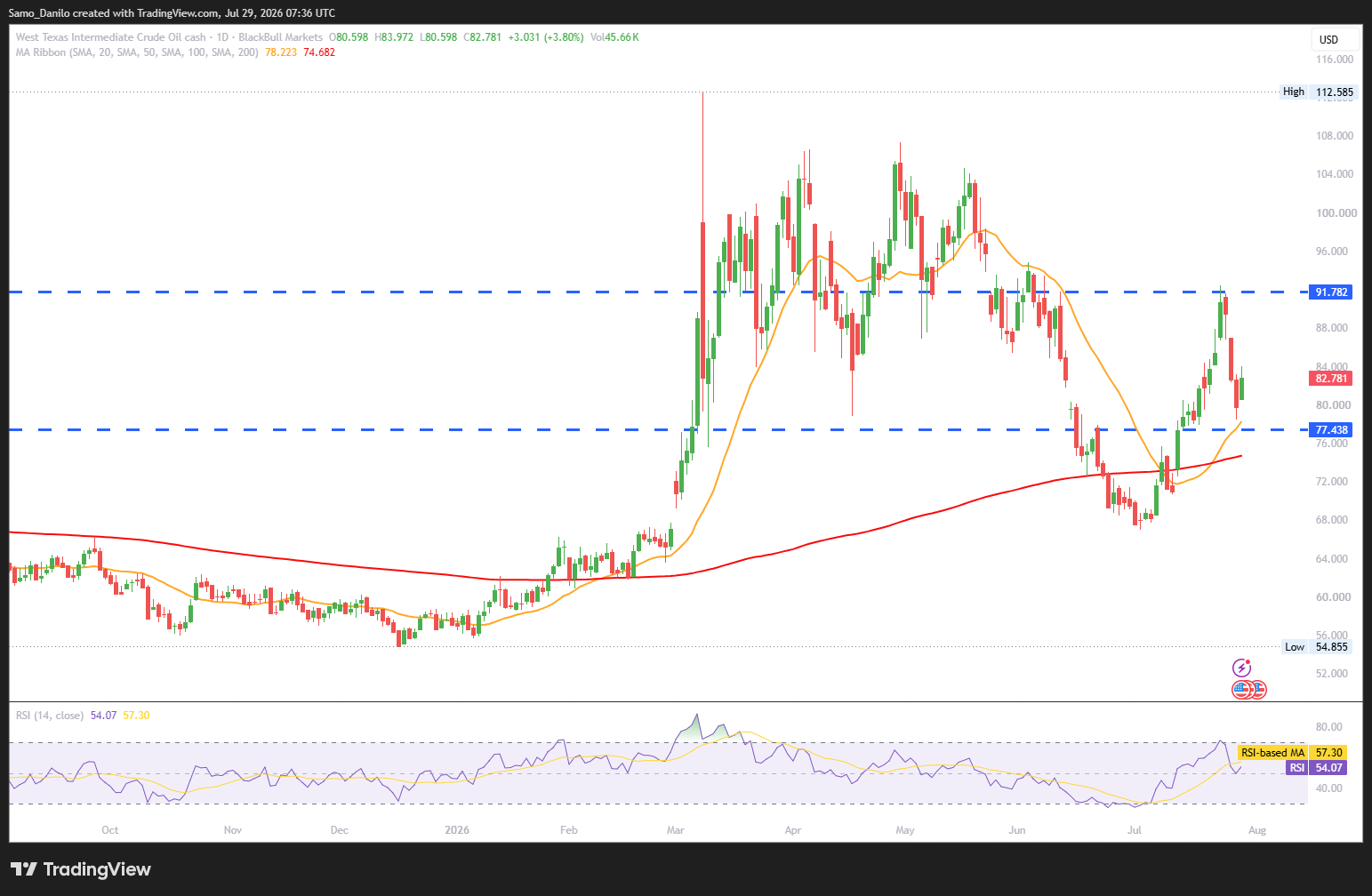
| SMA (20) | Slightly Rising | |
| RSI (14) | Slightly Rising | |
| MACD (12, 26, 9) | Slightly Rising | |
Closing statement: WTI has recovered as renewed geopolitical tensions in the Middle East and another significant decline in US crude inventories offset recent selling pressure. Investors will continue monitoring developments surrounding Iran and the Strait of Hormuz, alongside official US inventory data, for the next direction in oil prices.
DAX
- DAX 40 Price: Germany's DAX 40 extended its gains to around 25,515 points on Wednesday.
- German inflation: Markets expect Germany's headline Harmonized Index of Consumer Prices (HICP) to rise 2.8% year-over-year in July, up from 2.4% in June. A stronger inflation reading could reinforce expectations that the European Central Bank (ECB) will maintain a cautious stance on monetary policy.
- BMW jobs: BMW plans to reduce its German workforce by several thousand employees by the end of 2027 through a voluntary redundancy program agreed with employee representatives. The move is part of the automaker's ongoing efforts to improve efficiency and adapt to structural changes in the automotive industry.
- Deutsche Bank: Deutsche Bank reported stronger-than-expected second-quarter earnings, supported by robust performance in its investment banking division. The lender posted €1.6 billion in net profit attributable to shareholders, up from €1.5 billion a year earlier, providing a positive boost to sentiment in Germany's financial sector.
- BASF report: BASF posted a significant increase in net profit for the first six months of the year, driven by higher sales volumes, improved pricing, and gains from the disposal of one of its business units.
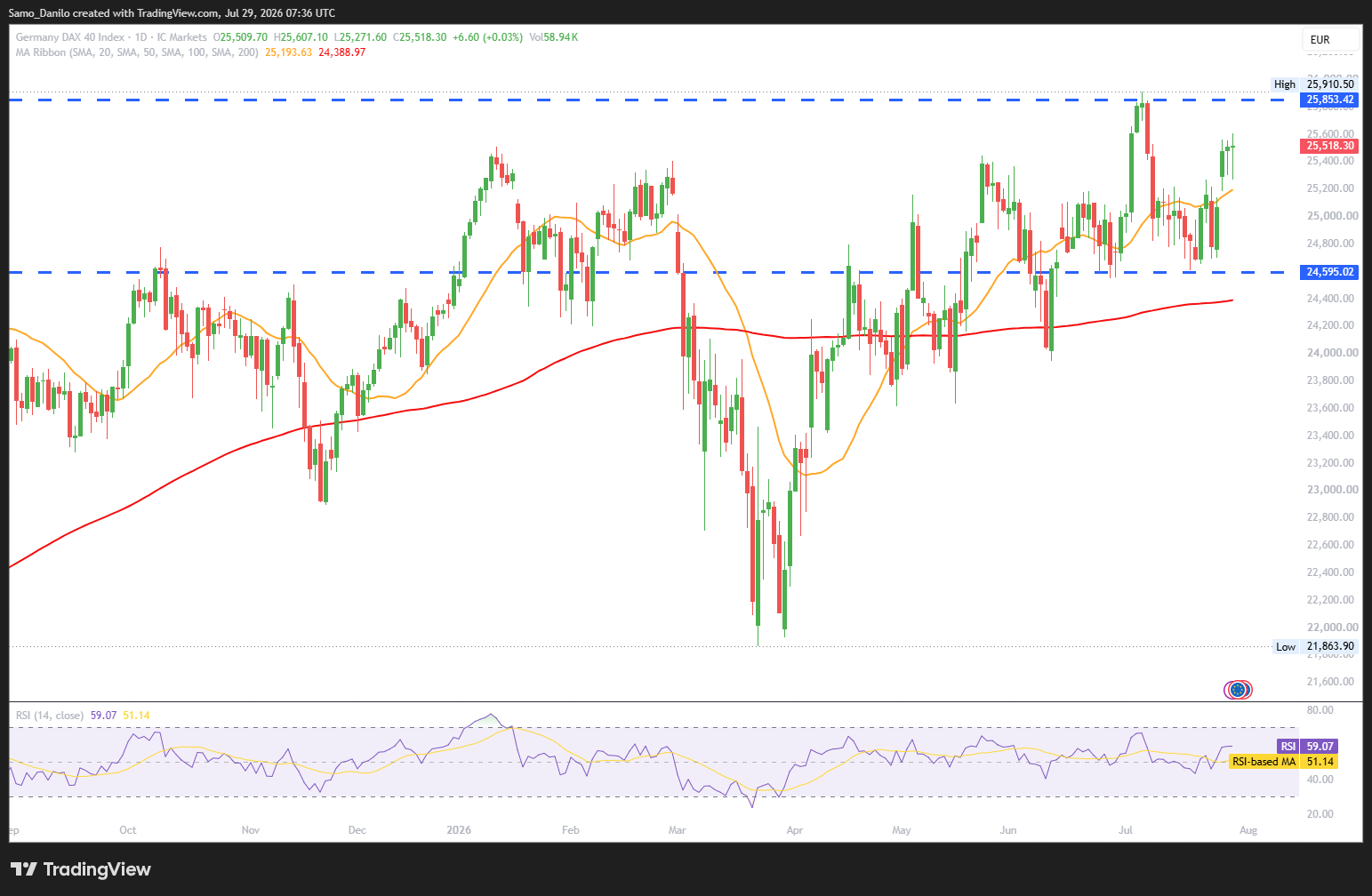
| SMA (20) | Slightly Rising | |
|
| RSI (14) | Rising | | |
| MACD (12, 26, 9) | Slightly Rising | |
Closing statement: The DAX 40 continues to benefit from strong corporate earnings, with positive results from Deutsche Bank and BASF helping offset geopolitical uncertainty. Investors will now focus on Germany's inflation data and upcoming ECB policy expectations to assess whether the index can extend its recent gains.